

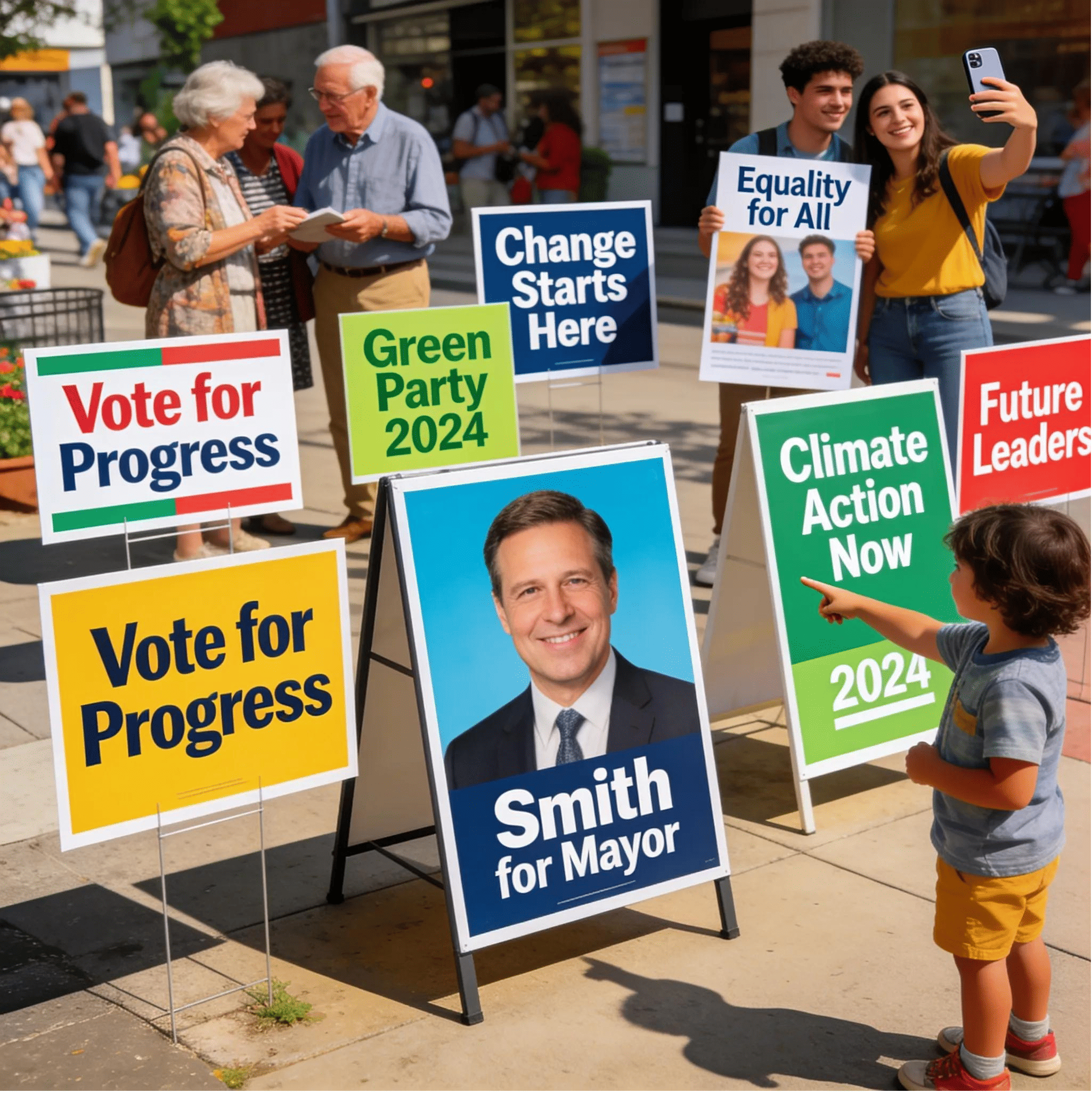
Understanding the regulations surrounding election signage is crucial for political campaigns aiming to comply with municipal laws and avoid penalties. This comprehensive guide provides a detailed overview of the various rules governing election signs across Canada, helping campaigners navigate the complexities of local regulations. By familiarizing themselves with the specifics of these regulations, candidates and their teams can ensure their campaign signage adheres to legal standards, which is essential for maintaining a positive campaign image. This article covers key points such as municipal authorities, permit acquisition processes, sign installation timelines, enforcement agencies, and innovative practices in sign design.
What Are the Key Municipal Election Sign Regulations in Canada?
Municipal election sign regulations in Canada vary significantly across provinces and municipalities. These regulations dictate aspects such as sign size, placement, and materials used, all of which are vital for candidates to understand in order to comply with local laws. The importance of adhering to these regulations cannot be overstated, as non-compliance may result in fines or the removal of campaign signs.
Which Municipal Authorities Govern Election Sign Rules?

In Canada, various municipal authorities are responsible for regulating election signage. Local bylaws typically oversee these regulations, often set by city councils or regional governing bodies. For instance, cities like Toronto, Vancouver, and Calgary have unique regulations that campaigners must navigate. Understanding the specific governing authority in each jurisdiction is critical as it influences the types of regulations imposed.
How Do Sign Size, Material, and Placement Requirements Vary by Locality?
Requirements for election signs regarding size, material, and placement can differ drastically from one locality to another. For example, some municipalities may impose restrictions on the height and area of signs, while others may have specific materials that are permitted or prohibited. Additionally, placement restrictions can vary based on the proximity to public spaces or private properties. Therefore, it’s important for candidates to research local regulations thoroughly to ensure compliance with their campaign signage.
How to Obtain and Comply with Election Sign Permits?
Acquiring the necessary permits for election signs is a fundamental step in ensuring compliance with local regulations. The process typically involves submitting an application that adheres to municipal standards and guidelines.
What Are the Steps to Secure a Political Sign Permit?

To secure a political sign permit, campaigners should follow several key steps:
- Research Local Regulations: Identify the relevant bylaws governing election signs in your municipality
- Prepare Application Materials: Gather necessary documents, including proposed sign designs and shown locations
- Submit Application: File the application with the appropriate municipal authority
- Await Approval: Allow time for review and be prepared to address any concerns raised by officials
Following these steps can streamline the permitting process and enhance compliance.
Which Common Permit Restrictions Must Campaigns Follow?
Common restrictions that campaigns must adhere to when obtaining permits include:
- Size Limitations: Many municipalities impose maximum height and width restrictions to maintain aesthetic standards
- Placement Guidelines: Restrictions often dictate how close signs can be to intersections, sidewalks, and residential properties
- Material Regulations: Certain materials may be prohibited due to safety or visibility issues
Familiarizing oneself with these restrictions is essential to avoid costly violations.
What Are the Timing and Removal Deadlines for Temporary Political Signs?
Timelines for the installation and removal of political signs are typically regulated by municipal laws, necessitating careful attention from campaign teams to avoid penalties.
When Can Election Signs Be Installed and When Must They Be Removed?
Many municipalities allow election signs to be installed a designated number of days before an election, with strict guidelines on when they must be removed after the election. For example, some regions allow yard sign placement starting 30 days prior to a vote, while others might permit only 14 days. Removal deadlines commonly require signs to be taken down within a specific window after election day, often within 48 to 72 hours.
What Are the Penalties for Late Removal or Unauthorized Display?
Penalties for failing to comply with sign removal deadlines or displaying unauthorized signs can include fines and potential legal action. Municipalities typically enforce these regulations through local bylaw officers, who are tasked with monitoring compliance during and after the election period.
Who Enforces Election Sign Regulations and What Are the Penalties?
Enforcement of election sign regulations is an essential aspect of maintaining fair and orderly elections. Various governmental and municipal agencies are responsible for ensuring compliance with these laws.
Which Government or Municipal Agencies Monitor Compliance?
In Canada, municipal authorities often employ bylaw enforcement officers or electoral agencies to monitor compliance with election signage regulations. These agencies are responsible for assessing the legality of signs and ensuring they meet local standards. Additionally, provincial electoral agencies may play a role in overseeing compliance during elections.
What Are Typical Penalties for Election Sign Violations?
Typically, penalties for violations can range from monetary fines to the order of sign removal. The severity of the penalty often depends on the nature and frequency of the violations. Some municipalities may impose escalating fines for repeat offenders which can significantly impact campaign budgets.
What Are Emerging Best Practices and Innovations in Political Signage?
As technologies advance and sustainability becomes increasingly pivotal, best practices in political signage are evolving. Campaigns are adapting to incorporate innovative techniques for effectiveness and compliance.
How Are Sustainable Materials Changing Election Sign Design?
The shift towards sustainable materials in signage design is gaining momentum as campaigns aim to enhance their environmental footprint. Many teams are now utilizing biodegradable materials for signage, which reduces waste and appeals to eco-conscious voters. This approach not only aligns with contemporary environmental standards but also positions campaigns positively in the eyes of the electorate.
What Role Does Digital Signage Play in Modern Election Campaigns?
Digital signage has emerged as a compelling tool in political campaigns, enabling rapid messaging and adaptability. Campaigns can dynamically change messages based on current events or voter engagement levels. However, it’s crucial to ensure that digital signs comply with local regulations regarding placement and visibility, which adds another layer of complexity to their use.